
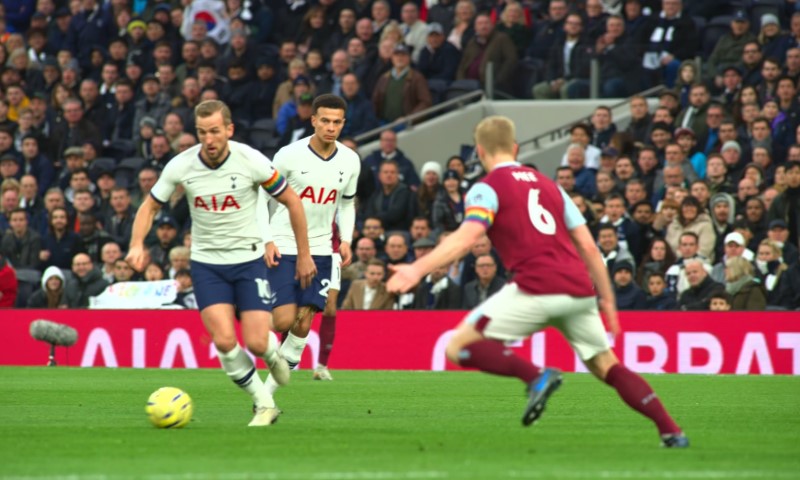
English football treats relegation as part of its identity. No matter how famous the badge, a bad season can send a club into the second tier.
That is why long top-flight runs matter. They reveal more than trophies. They show institutional strength, good timing, loyal support, financial muscle, and, in some cases, plain survival instinct.
For clarity, “top flight” means the old Football League First Division up to 1991/92, then the Premier League from 1992/93 onward. The Premier League itself says the current competition is the top tier of England’s and European football pyramid, with 20 clubs and relegation for the bottom three each season.
The Longest Current Top-Flight Runs In English Football
Current runs are counted by seasons actually played in the top division, not calendar years lost to wartime suspension.
Under that method, Arsenal reached 100 consecutive top-flight campaigns in 2025/26, having played at the highest level since 1919.
| Rank | Club | Current Top-Flight Run Began | Consecutive Top-Flight Seasons In 2025/26 | Last Top-Flight Relegation |
| 1 | Arsenal | 1919/20 | 100 | 1912/13 |
| 2 | Everton | 1954/55 | 72 | 1950/51 |
| 3 | Liverpool | 1962/63 | 64 | 1953/54 |
| 4 | Manchester United | 1975/76 | 51 | 1973/74 |
| 5 | Tottenham Hotspur | 1978/79 | 48 | 1976/77 |
| 6 | Chelsea | 1989/90 | 37 | 1987/88 |
| 7 | Manchester City | 2002/03 | 24 | 2000/01 |
| 8 | West Ham United | 2012/13 | 14 | 2010/11 |
| 9 | Crystal Palace | 2013/14 | 13 | 2004/05 |
| 10 | Brighton And Hove Albion | 2017/18 | 9 | 1982/83 |
Six clubs have also played in every Premier League season since the competition began: Arsenal, Chelsea, Everton, Liverpool, Manchester United, and Tottenham Hotspur.
Arsenal: England’s Great Top-Flight Outlier
Arsenal sits alone at the top of the list. Their run began in 1919/20, when the club entered the expanded First Division after World War I. The detail still stirs debate because Arsenal had finished outside the automatic promotion places before the league expanded, yet the club won election to the top tier.
Opta Analyst notes that Arsenal have held the record for the longest unbroken top-division stay since they overtook Sunderland’s old mark in 1983/84.
The remarkable part is not only the length of the run. It is the range of eras covered. Arsenal’s stay has moved through Herbert Chapman’s 1930s dominance, post-war rebuilding, the Bertie Mee double, George Graham’s defensive machine, Arsène Wenger’s modern revolution, the Invincibles season of 2003/04, and the club’s recent return as a title and Champions League contender.
Arsenal have had poor league years. The 1970s included genuine danger near the bottom. The late Wenger period and early post-Wenger seasons brought a slide away from the Champions League places.
Yet relegation never arrived. The club’s floor, even in awkward periods, remained higher than most rivals could guarantee.
Everton: The Great Survivors Of The English Game
Everton’s story is different. Arsenal owns the longest continuous spell, but Everton has spent more total seasons in England’s top division than any other club. Opta Analyst put Everton on 122 top-flight seasons by early 2025, ahead of Aston Villa, Liverpool, and Arsenal.
The current Everton run began in 1954/55. Since then, the club have won league titles, lifted cups, played in Europe, declined, recovered, and endured several modern relegation scares. Their recent years have been especially tense, with narrow escapes, ownership turbulence, points deductions, and the emotional farewell to Goodison Park before the move to Hill Dickinson Stadium.
That makes Everton’s streak feel fragile in a way Arsenal’s rarely has. Arsenal’s run often reads like a story of elite permanence.
Everton’s reads like a weekly fight to protect history. The club’s place near the top of the all-time table gives its supporters a powerful claim: few English clubs have lived as much top-flight football.
Liverpool: Promotion Under Shankly, Then A Red Empire
Liverpool’s current top-flight run began in 1962/63 after Bill Shankly led the club out of the Second Division. The transformation was rapid. Liverpool won the First Division in 1963/64, then became one of the defining clubs of English and European football.
RSSSF’s champions list records Liverpool’s 1964, 1966, 1973, 1976, 1977, 1979, 1980, 1982, 1983, 1984, 1986, 1988, 1990, 2020, and 2025 league titles after that return.
Liverpool’s streak is not merely about avoiding relegation. It has been unusually competitive. The Guardian reported in 2025 that Liverpool had not finished outside the top eight since their 1962 promotion, a consistency record that sets them apart among current English top-flight clubs.
The club also refreshed its historical standing in 2025, when Arne Slot’s side won the Premier League and matched Manchester United’s record of 20 English top-flight titles. Reuters reported that Liverpool sealed that title with four matches remaining after beating Tottenham 5-1 at Anfield.
Manchester United: One Relegation, Then Half A Century Back
Manchester United’s current top-flight run started in 1975/76. Their last relegation came in 1973/74, a shock that still looks strange given the size of the club.
United returned quickly, then spent the 1980s as a giant searching for a league title before Alex Ferguson turned them into the Premier League’s dominant force.
The Premier League era made United the modern benchmark for sustained success. The competition credits Manchester United with 13 Premier League titles, the most by any club since 1992.
Their run also shows how quickly power can shift. United have remained top-flight ever-presents, yet the post-Ferguson years have brought uneven league finishes, managerial churn, and recruitment problems. Long residence at the top level does not guarantee modern control. It only keeps a club in the room.
Tottenham And Chelsea: London Stability Built In Different Ways
View this post on Instagram
Tottenham have been in the top flight since 1978/79. Their run carries fewer league titles than Arsenal, Liverpool, or United, but it has real weight. Spurs became a Premier League ever-present, developed into a regular European qualifier for long stretches, built a major modern stadium, and turned their top-flight stay into a global commercial platform.
Chelsea’s run began in 1989/90, shortly before the Premier League era. Their top-flight permanence became far more secure after Roman Abramovich’s 2003 takeover, when the club moved from stylish cup contender to title-winning powerhouse. Chelsea won Premier League titles in 2004/05, 2005/06, 2009/10, 2014/15, and 2016/17, all listed by the Premier League in its roll of champions.
Tottenham and Chelsea prove a useful point: long top-flight runs can come from very different club models. Spurs built continuity through gradual growth and infrastructure. Chelsea’s modern peak arrived through heavy investment, elite managers, and aggressive squad building.
Manchester City And The Modern Meaning Of Permanence
Manchester City’s current run began in 2002/03. That sounds modest beside Arsenal or Everton, yet City’s past makes the run meaningful. The club had fallen as low as the third tier in the late 1990s before climbing back.
Since the 2008 Abu Dhabi takeover, City’s top-flight stay has become tied to dominance. The Premier League lists City among its seven champions, with title wins across 2011/12, 2013/14, 2017/18, 2018/19, 2020/21, 2021/22, 2022/23, and 2023/24.
City’s streak is shorter than those of several older powers, yet their influence on the modern Premier League has been enormous. Their case reminds readers that longevity and dominance can be separate measurements.
Why Long Runs Matter
A long top-flight run gives a club more than bragging rights. It affects revenue, player recruitment, sponsorship, stadium planning, academy pathways, and international visibility. Relegation interrupts all of that.
Supporters feel the weight most sharply. For Arsenal fans, 100 top-flight seasons signal a level of permanence no other English club has matched.
For Everton fans, every late-season escape protects a century-deep identity. For Liverpool fans, the streak connects Shankly, Paisley, Dalglish, Klopp, Slot, and every era in between.
FAQs
Summary
Arsenal’s century of top-flight football remains the benchmark. Everton’s record for total top-flight presence gives the club a separate historical crown. Liverpool’s uninterrupted run since 1962 combines longevity with rare competitiveness.
Behind them, Manchester United, Tottenham, Chelsea, Manchester City, West Ham, Crystal Palace, and Brighton show how survival, money, management, and timing all shape a club’s place among England’s longest-serving elite.